
It’s Corporate Greed, Stupid

Back when Bill Clinton was running for president, his campaign office famously had a sign on the wall that read, “It’s the Economy, Stupid.” It was how they reminded themselves what issue most concerned the voting public. Smart politicians would recognize that most people see corporate greed as the root of our economic problems, and adjust the sign on their wall accordingly.

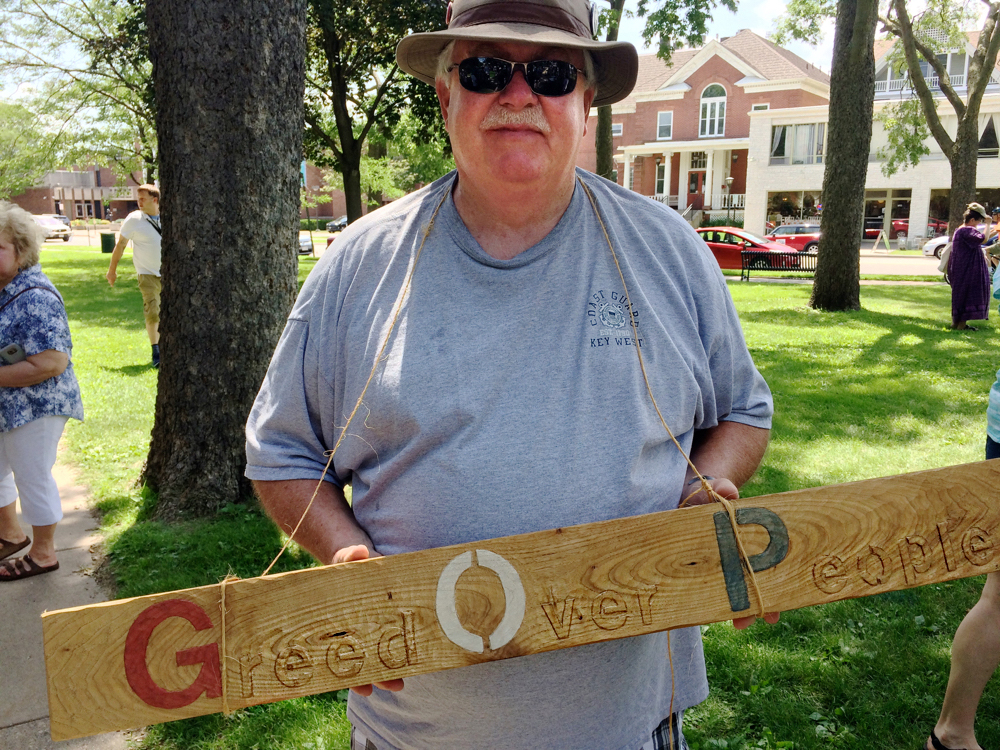
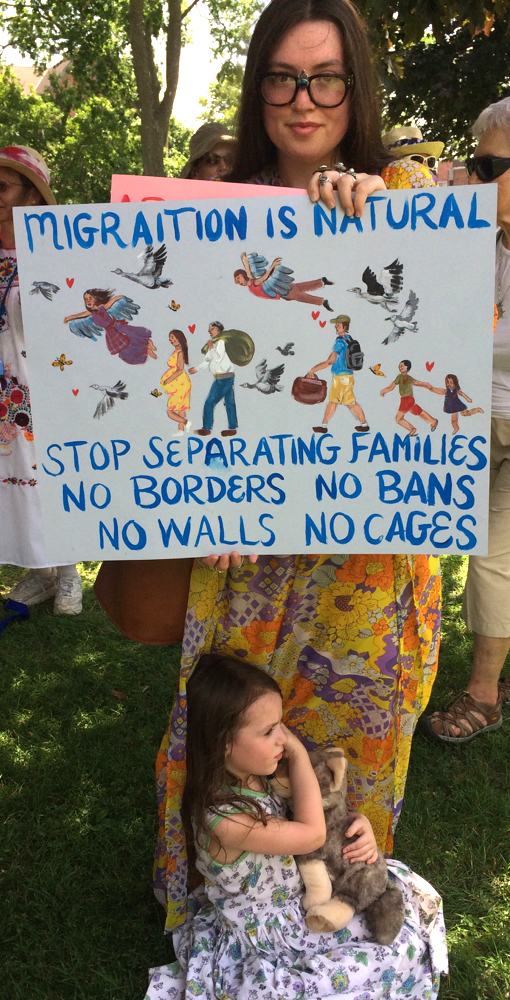
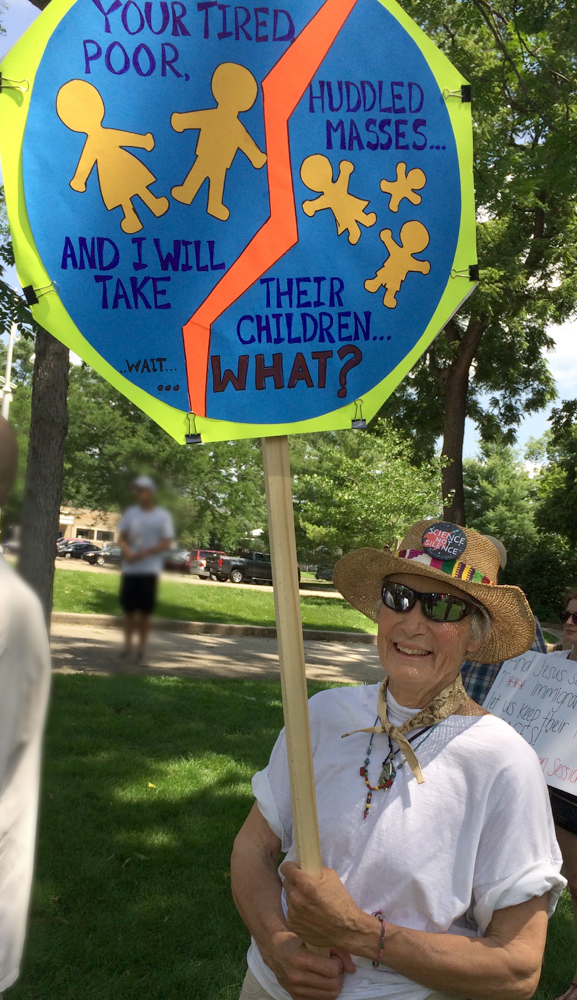
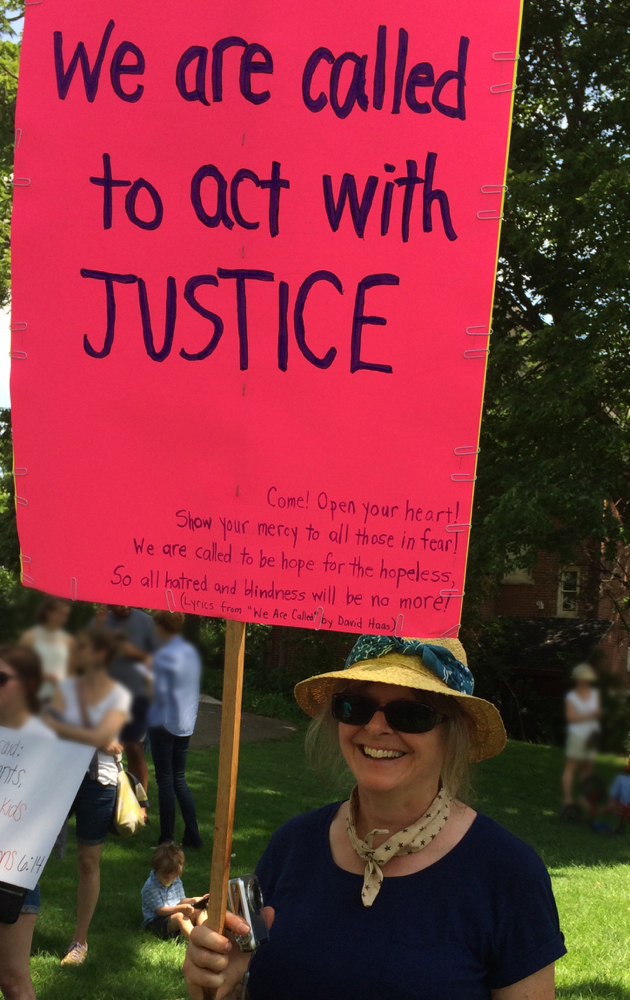
For two generations, we have watched a handful of rich people hoard the wealth while the rest of us struggle more and more to get by. There’s a limit to how much the monarchs of our world can impoverish the rest of us before angry mobs with torches and pitchforks appear at the castle gates, and Occupy Wall Street is the modern equivalent of that angry mob.

Corporate funded media pundits feign mystification as to the grievances or demands of the 99-percenters. The truth is that these shills can’t say “corporate greed” (grievance) or “economic justice” (demand) out loud. After all, they’re employed by some of the largest corporations in the world, so they wouldn’t dare say anything favorable about the demonstrators. So all they have to offer are insults, ridicule and shoulder-shrugging.

Let me illustrate how greedy the banks have become during my lifetime. My first savings account had an interest rate that fluctuated between 4% and 5%. So if I had $10 in the bank for a year, I had $10.50 at the end of the year. That’s right, I made 5% interest on $10. My student loans had a 7% interest rate, and consumer loans typically were at 9%. Credit card interest rates of 12% were considered an outrage.

So if the bank charged 8% interest on a loan, their “cost” was the 5% they paid the depositors, so they made a 3% profit on the loan. (This sets aside their ability to loan out $5-10 for every dollar in deposits.) Bankers had no problem making a decent living under these conditions.

But now a savings account yields 0.5%, and that’s only if you have thousands of dollars in the bank. Meanwhile, consumer loans below 10% are rare, and credit card interest rates that low are little more than a dream. So the entire (typical) 12% interest rate the bank makes on a loan is gravy, since the depositors get next to nothing. Yet the banksters cry for more, and every time their price gouging is restrained, they find another fee to raise to make up for it.

This is one example among hundreds of how the rich are ripping off the rest of us, and of how the American dream has been crushed. As we were growing up, we were told this was a great country because if you played by the rules, worked hard, and got educated, then you would be taken care of and there was no limit to what you could achieve. But now millions of people who played along find their jobs shipped off to China, and those lucky enough to still have jobs work at poverty wages with no benefits.

So what was once the most prosperous country in the world has become a feudal society, where the money monarchs steal, swindle and hoard the wealth while leaving the rest of us with nothing. And then they wonder what the Occupy Wall Street movement is complaining about.

The great success of the Occupy movement (as of now) is that a national conversation has been started. We are aware that the system is broken, and we know why it’s broken. Now we must develop and enact a series of solutions to bring fairness, equality and opportunity back into our society.

I have a list of ideas that I intend to throw out into the ether for discussion in a series of posts over the coming days and weeks (as time permits). The money monarchs now own every square of the metaphorical Monopoly board we live on, and they’ve also seized all of the money. Now we need to change the rules so that the rest of us can find a way to survive and thrive.

Stay tuned.

Proposals (updated Nov 9, 2011):
How Much is Enough? The Case for a Maximum Wage

Eagles Are Us

eagle_banner.jpg
Bald Eagle on La Crosse Marsh

A bald eagle warily watches a photographer near La Crosse, Wisconsin.

One of the special treats of living near the Mississippi River is that we share our space with bald eagles. Usually we see them in the wintertime near the river, as they like to catch fish from the open water.

The eagle shown here was spotted over the marsh, along the bike trail between La Crosse and West Salem. A set of high-voltage power lines run next to the trail, and the eagle was perched in one of the towers.

Eagle on power tower

A wide view of the eagle's perch.

Too often when we get this close to a special bird, we either don’t have our best camera along, or the bird flies away before we can get it out. To our amazement, this bird struck some iconic eagle poses for us before flying off to look for food in some other part of the marsh, away from the paparazzi.

Bald Eagle near La Crosse

The eagle near the bike trail warily watches a photographer with his other eye.

A Month of Storms in 100 Seconds

RoZ and I are both weather geeks, and I’m a sucker for time-lapse video. I also think the brief animation of weather photos (satellite images, radar, etc.) that we see on TV or the Internet are kind of lame.

Knowing that the satellite picture is regenerated every half hour (and that the weather was about to get interesting), I set up our computer to automatically grab the image every half hour. I let the automatic frame grabber run until the weather got boring again, and assembled the 1300+ images into the video presented below.

You’ll see the progress of hurricane/tropical storm Irene, Lee, Katia, Nate, Maria and Ophelia. In between, there’s a persistent low pressure system that whirls over the midwest.

httpv://www.youtube.com/watch?v=RY-HRfTEQ5c

Mourning Dove and Downy Woodpecker

CranesAndCows.jpg

It’s time to share some pixels that finally escaped our camera today.

On the top of the page are some cattle sharing their pasture with a pair of sandhill cranes, as seen from our favorite bike trail about nine miles from home. (If you don’t see cattle and cranes, click on the title of this post.)

We have a grape vine supported by a trellis in our back yard. This year, a mourning dove built her nest in the grape vines.

A mourning dove minds its nest, nestled in a trellis of grape vines.

Today we were entertained by this woodpecker. Our bird book seems to say it’s a downy woodpecker, but we’re willing to be corrected if we’re wrong.

A downy woodpecker hunts for seeds on a tree near the La Crosse marsh.

Steve Jobs – A Pioneer in User-Friendly Design

iSadThe news of Steve Jobs’ passing was delivered to me on the screen of my Apple computer. It’s kind of fitting, given the many ways that he has affected our day-to-day lives whether we use his products or not.

My first exposure to Steve Jobs was on an episode of Nightline in the late ’70s or early ’80s. He was a talking head guest discussing the advent of the personal computer. The line that sticks in my head to this day (paraphrasing from memory): “Just as a tool is an extension of our hands, the computer is an extension of our brains.”

(Here’s a youtube video of a young Steve describing computers as “bicycles for our minds.”)

He went on to discuss how these tools – once exclusively owned and operated by rich corporations and governments – were now accessible to ordinary people, and that this would cause the innovation and transformation that we’ve all witnessed since then.

Steve didn’t invent computers, portable music players or smartphones. What he did was to refine these products down to the most minute detail to make them not only easy to use, but a joy to use. Read on

Sympathy for the Klutz

We’ve all had incidents at work that we’re not very proud of, but they’re the kinds of incidents that inspire a lot of good-natured banter with our co-workers. The day the wrong file was deleted, or an armload of dishes was dropped, that kind of thing.

A utility worker in the Arizona desert had that type of experience late last week. As he was trying to fix or replace a finicky piece of equipment, he flipped the wrong switch or cut the wrong wire or something, and all the lights went out from Orange County to Tijuana to Arizona.

As much of a disaster as that was, I’m willing to cut the poor worker some slack. We’ve all had our own experiences creating disasters, but things got fixed, and now we laugh about it with our coworkers in the lunch room. Read on

Why I’m a Conservative

I often participate in a discussion group where someone recently asked, “Is America center-right or center-left?” It got me to thinking about labels, and how they’ve been twisted, distorted and co-opted. Many respondents criticized the use of such labels, arguing that human character is far too complex to divide into black and white categories.

I felt compelled to weigh in, and I’ll share my answer with the rest of the class:

As I can see from previous answers, trying to use labels like “left,” “right,” “liberal,” “conservative,” etc. is too simplistic, and each label carries a certain amount of baggage that it doesn’t deserve.

I abhor environmental waste, the way that our culture frivolously destroys resources that may take millions of years to replace. By the same token, I don’t think we should be frivolous with money either. I would think that those are both “conservative” positions.

I also feel that we should treat one another with respect and dignity, that we have a duty as responsible community members to look out for each other and help each other out in times of need, and that if someone else’s lifestyle choices are no harm to me then they’re none of my business. When did any of this stop being a “conservative” position?

I think much of the American public falls in line with my “conservative” positions, but the politicians and pundits who talk this way are labelled “liberal” or “radical.” Many authors have pointed out studies and polls indicating that if politicians pursued policies that the public wants, the USA would be much more like Sweden.

Scott Walker’s Opposing Positions on Biomass

Scott Walker must think Wisconsinites have short memories.

Walker’s predecessor initiated a project to install a biomass boiler at the state-owned Charter Street power plant in Madison, where an aging coal boiler was due for replacement. Even though a biomass boiler is more expensive initially, it saves a great deal of money in the long run because the supply of biomass is more reliable and less expensive than natural gas, and it would be supplied by Wisconsin farmers and forests.

When Walker became governor, he immediately killed this project, and with it he killed a new green industry in Wisconsin and the jobs that would come with it.

Why am I bringing up a story from nearly a year ago? Because last Friday, Scott Walker was singing the praises of biomass.

Gundersen Lutheran Hospital in La Crosse has a 40-year-old gas boiler that needs replacing, and they just got a $140,000 grant from the Wisconsin Bioenergy Grant Program to install a biomass boiler. For some reason, Scott Walker believed that he was the appropriate person to personally deliver the oversized check.

So the same person who killed the Charter Street upgrade in January is now posing in front of the TV cameras in La Crosse as a champion for biomass. Setting aside the discussion of whether or not biomass power plants are a good thing, one has to wonder how to explain the inconsistencies of Scott Walker’s position.

Decennial Anniversaries

RoZFirehole.jpg

I put up a new banner image tonight. RoZ is sitting next to the Firehole River in Yellowstone National Park in an image captured exactly ten years ago (give or take a day). At this time in 2001, we were finishing a road trip of a lifetime through the western United States, and we would soon be preparing to spend two months in Europe.

In the coming weeks and months, we will release a new project that will tell a much more complete story of this life-changing experience. Until then, the web site we published while we were in Europe is still online, but that will also be incorporated into this new project. Stay tuned.

Twenty years ago this summer, in 1991, I was living in my step-van in Austin, Texas, slowly getting back onto my feet after leaving a commune I had been with for the previous thirteen years (yet another story that’ll be told in full, someday).

Thirty years ago, in the summer of 1981, I was living in Isla Vista, California (the student ghetto of UC-Santa Barbara). I was essentially in exile from the commune, but I had my own bike, a PO box, food stamps, a place to keep my stuff, a cozy place to sleep in a secluded piece of an overgrown park, but no roof.

Even though I was essentially homeless for about six months, I have fond memories of that summer. It helps that it never rained. But I also became part of a whole community of young hippies that populated the low-rent houses of the neighborhood, and together we participated in the Diablo Canyon blockade, one of the biggest anti-nuclear actions ever conducted.

The summers of ’91 and ’81 could be considered traumatic life-changing events, but in retrospect they were memorable and enriching experiences. The summer of 1971 was spent recovering from physical trauma: a serious bicycle accident that had me in the hospital for a few days in June and licking my wounds for the rest of the summer.

I don’t know what kind of life-changing event – if any – 2011 will bring. I’m willing for this year to be the one that breaks this decennial pattern, but if something big happens this summer, I hope it’s something good.

Passing the Savings on to the Corporate Till

The next time some corporate shill cries that raising their expenses will raise prices for their customers, or that lowering their expenses will enable them to pass savings on to their customers, know that they’re spewing bullslop.

The taxing authority of the Federal Aviation Administration (FAA) was shut down recently, so airline passengers should have seen about a 10% reduction in the price of their airplane tickets. After all, there was no tax on those tickets. But did the airlines “pass the savings on to YOU!”? Of course not. Ticket prices stayed the same, except that the money that USED to go to the FAA was kept by the airlines.

So now we know that making products with Chinese slave labor is not to give us low prices, but to give corporations higher profits. When electric utilities get less regulation, we don’t get lower rates – the utilities get higher profits. When big corporations drive down the wages of their unionized workers, they don’t lower their prices – they fatten their profits.

So the next time some pundit is on the radio or TV saying that some policy will mean higher or lower prices for consumers, you know it’s bullslop. “Lower prices” is little more than code for higher corporate profits. We never see lower prices, but those corporations sure have great earnings reports.